
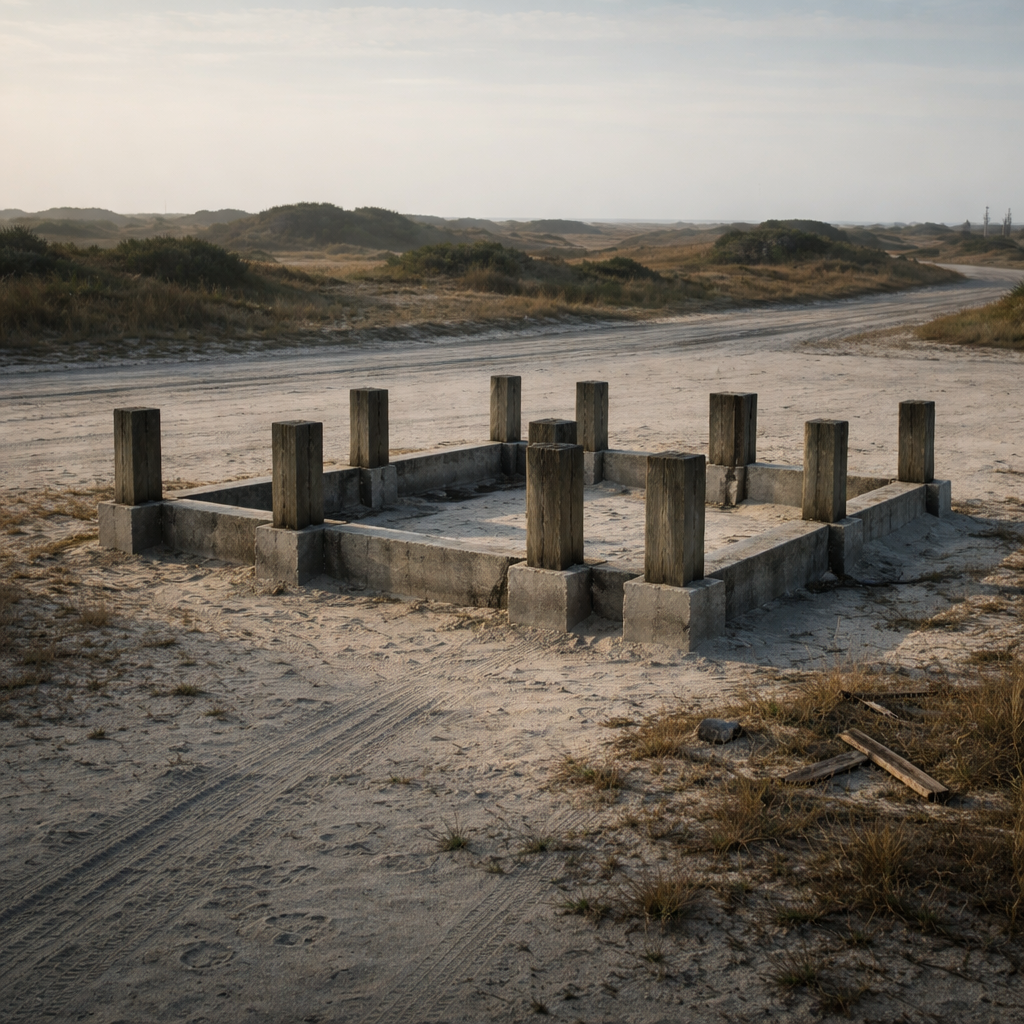
Captain Noonan, the “Bearded Holmes” of the Sandersonville Police Department, was in a life-and-death struggle with the scourge of the modern world: a reluctant jar cover. He had attempted every one of the tried-and-true remedies for a recalcitrant jar cover. None of them worked. So, reluctantly, he did what he should have done in the first place: pass the problem on to someone with expertise. In this case, the solution was not far away: Corporal Harold Harrison in Burglary was a weightlifter.
Noonan was about to pick up the phone and call for a mission of mercy when the tallest, thickest man he had ever seen plucked the jar of garlic-stuffed olives off his desk and twisted the cap loose by just using his thumb and forefinger.
“That was cute,” said Noonan. “Where’d you learn to do that?”
“I used to be a circus strongman.”
“Whoever said brawn had gone out of style?” said the detective, “and why do I have the pleasure of your company?”
“I’m here to discuss the Lavender Ganglia of Corolla.”
“Right,” said Noonan. “Lavender is a color and ganglia is part of the brain, and Corolla is a city on the Outer Banks, but I’ll be damned if I can put them all together.”
“Not a problem,” said the man standing in front of the desk. “The police in Corolla spent most of their time laughing.” He thrust out his hand, “John Jones. And that is really my name.”
Noonan stood and shook the man’s hand. “Heck of a name for a muscle man.”
“Hercules,” Jones turned sideways and rippled a muscle that was clearly visible beneath his shirt. “‘Mighty Hercules,’ as a matter of fact. But my real name is John Jones.”
“Now that your name is out of the way, what can I do for you?”
“I have a strange story . . .”
“If you didn’t have a strange story, you would not be here,” said Noonan. “You would be hard-pressed to tell me something I find odd.”
“OK. I am missing my store. It was called the Lavender Ganglia, and it was stolen over the weekend.”
“Someone stole your store?”
“That’s right. Pulled it right off its foundation and disappeared into the night.”
“In Corolla, right?”
“The store was in Corolla. I don’t know where it is now.”
“Funny man. How big was the store?”
“1500 square feet. 1,000 on the main floor and a 500-foot loft.”
“This is a building, right? Was a stand-alone structure,” Noonan was scratching his head. “Or was it a trailer that had wheels?”
“Nope. It was a stand-alone structure. Someone just picked it up off the foundation and rolled away with it. There were tire tracks all over the place.”
“Raising a store is not something you can do overnight.”
“Oh, no. The store was supposed to be moved. It just wasn’t moved by the company that was supposed to do it.”
“This is getting convoluted. Hercules,” he paused. “That’s the name you want me to use, right?”
“Good enough for me if you get my store back.”
“OK, Hercules. You were planning on having your store moved, and it was ready to be moved, but the wrong company moved the building.”
“That’s right.”
“Someone just came in during the night and snatched a 1,500 square foot building.”
“Yup.”
“And you don’t know where the building is?”
“Yup.”
“What’s the building worth?”
“Well, nothing. I wasn’t planning on selling the building. I was raising it to put in the bottom floor. I’ll bet moving it would cost as much as the store is worth.”
Noonan thought for a moment. “The name of the store, the Lavender Ganglia. Where did that come from?”
“It’s a flower, a hybrid. I created it myself. I called it ganglia because it looks a bit like a ganglia.”
“And it’s lavender?”
“Pretty obvious, eh?”
“Yeah,” said Noonan. “Anything in the store when it was stolen?”
“Nope. Clean as a whistle.”
“OK, let’s try something else. When was the store built?”
Hercules smiled. “That’s easy, summer of 1922. There had been a real nasty winter and all kinds of ships had gone aground. The CARROL A. DEERING, for instance, the Ghost Ship of North Carolina. My wife’s grandfather got the CAROL A. DEERING timbers at auction. As for the rest of the building, well, you know how people on the Outer Banks are when it comes to shipwrecks. God provided them with lumber so they built homes.”
“But that wasn’t free lumber,” said Noonan. “I thought there was some kind of a shipwreck commission that decided who got what.”
“Oh, there was,” said Hercules. “But that was only for those who got what could be identified. A complete ship, it was auctioned off. Loose timbers and such, he who got it kept it. My store got the foundation timbers legally, but the siding, well, you can imagine. All that lumber on the beach and no one knowing whose it was . . .” He let the insinuation hang and spread his arms in mock innocence.
“Yeah, I know the Outer Banks all right,” said Noonan, “the difference between piracy and salvage is how fast the ship is sinking.”
“That’s one way to put it. But I did lose a store, and I’d like it back.”
“OK,” Noonan sighed and said, “I have a few questions for you. First, was the store actually jacked up when it was stolen? Second, how many men were working on the renovation the day it was raised on the ground. Third, when did you notice the building was missing? When did you call the police? What time did the police arrive? Finally, why do you want the building back?”
Hercules looked at Noonan. “Let me answer the last question first. I don’t want the building back. It’s too small for the flower shop, too expensive to keep cool, too old to refurbish and too dilapidated to have any value. But my wife grew up in the building and it’s been on property that’s been in her family since the reign of King James.”
Noonan shook his head sadly. “I have in-laws from the Outer Banks, so I know what you mean.”
Hercules sat down, the chair squeaking a bit as he settled. “Let’s see if I can remember what you asked. The structure was clear of the foundation in the sense that you could see completely under the building. I’d say there was a four-foot gap between the top of the cement and the bottom of the wood structure. The structure was sitting on pilings. There were about 10 men at work when the house was being jacked up. I knew the store was missing when I was called at 10 a.m. the morning after it was stolen. When I left at 5 p.m. yesterday, the house was there. At 10 a.m. this morning it was gone. I called the Corolla Police and they got there when I did; about 11 a.m.”
“How many police were there?”
“Three. The whole contingent.”
“How long did they stay at the site of the theft?”
“30 seconds. Then they headed north. They figured that anyone moving a building was going to have trouble getting it under the power lines and phone lines that crossed the highway. Those power and phone lines are all across the road in Corolla. The house had to have gone north and that’s where they went.”
“And they didn’t find diddly,” said Noonan.
“You’ve got it. Nothing. Then they said they didn’t know what to do and gave me a police report that said the store had been stolen. Told me to collect the insurance money and build a modern structure.”
“I’ll bet you wife loved that.”
“I won’t eat solid food until the store is found.”
Noonan chuckled. “A couple of more questions, was the Lavender Ganglia actually in Corolla or on the outskirts of town?”
“Just about the last building to the north. There were two abandoned homes further along, but we’re pretty isolated where we are. Or were. After us, there was nothing but 30 miles of empty highway all the way to Back Beach. Lots of places to hide something back there, but a building is pretty hard to hide.”
“On which side of the road was the store?”
“Beach side.”
“What about the hookups? You know, water, sewer, phone, electricity? Did it have an alarm?”
“All of the utilities come from the other side of the highway and they were disconnected. An alarm? For a flower shop? In Corolla? No, there wasn’t an alarm.”
Noonan leaned back in his chair. “Well, do you want the good news or the bad news?”
“You know where the store is?” Hercules rose to his feet in surprise.
“If I said ‘yes,’ I’d be guessing. But, yeah, I think I know where it is.”
“Where?”
“As you are driving south . . .”
“South? But how could the store . . .”
“I’m getting to that. As you are driving south, just after you get to the Herbert C. Bonner Bridge, you will see a dirt road that cuts off to the west. It runs a few miles to the old ferry port. Back in the days before the bridge was built, that’s how people got to the Outer Banks. After traffic started using the bridge, the port was abandoned.”
“But how could whoever stole the store move it that far south under all those overhead lines?”
“They didn’t move the store as a unit. It was snapped apart, and the walls and roof were laid flat on the trailer.”
“How do you know that?”
“Well, the store is gone. It did not go north. It had to go south. It could not go south as a building, so it must have been taken apart. Since it has not been found, it has been hidden or abandoned. I’m betting abandoned.”
“Why would someone want to steal a store that has no value?”
“You are correct. The store has no value at all. But what is under the store is very valuable indeed.”
“You mean gold or something like that?”
“Good as. Do you know what provenance is?”
“Maybe. But why don’t you tell me anyway.”
“Provenance is proof of authenticity. If you want to buy a Picasso painting, how do you know it’s really a Picasso and not a fake? Well, you get a document from the art dealer that provides a history of the sale of the painting. Picasso sold it to Person A who sold it Person B who sold it to Person C who sold it to you. The painting has a provenance so you know it is authentic.”
“What does this have to do with the Lavender Ganglia?”
“The house raisers out here are local folks. There’s also a little bit of a pirate left in some of them. Here’s what I think happened. When the store was raised, and you could look into the foundation, maybe for the first time in almost a century, one or two of the men spotted the timbers. They knew what they were looking at. All of the wreck records are public information, so it would not have taken them long to figure out which ship the timbers came from. To a collector, CAROL A. DEERING timbers would be priceless.”
“But only if it could be proven that the timbers were from the CAROL A. DEERING.”
“Correct. “
“But even if you are right and the store was robbed for the timbers, how could anyone prove that the stolen timbers were from the CAROL A. DEERING?”
“There would be a paperwork trail. The salvage records would show that your wife’s grandfather bought the wreck. The police report would show that the same structure was stolen. That would probably be enough for crook.”
“Who’d buy something like timbers from a ghost ship?”
“That I don’t know. But they obviously have a value, otherwise the store would not have been robbed. As far as your store is concerned, I suggest you drive over the Bonner Bridge.”
“That’s going to make my wife happy.”
“Well, at least you’ll get a new building out of it.”
Hercules shook Noonan’s hand and headed for the door. Then he stopped and turned. “You make it sound so easy. Why couldn’t the local police figure it out?”
“The thieves were quite clever,” said Noonan as he easily opened the jar of olives. “They understood how people think. The police would arrive on the scene and be told a structure was missing. Since a structure was missing, they knew they would be looking for a building. No one said anything about the timber bracings. You didn’t say anything about the timber bracings. It didn’t cross their minds because it didn’t cross your mind. All of you were looking for something big. A building. If the parts of the building were dumped deep enough into the swampland, no one would ever find them. If you had never found the building parts, you’d never have known the CAROL A. DEERING timbers were missing. It was the perfect crime. No one knew what had been stolen.”
Hercules shook his head sadly. “Well, there’s a solid foundation for your theory.”
“Well,” said Noonan dryly, “if you don’t spar with your wife, you have a ghost of a chance of putting up some piling for a modern home.”
👉Learn more: https://bit.ly/3NJvjkk