
Heinz Noonan, the “Bearded Holmes” of the Sandersonville Police Department, was in bloody, gory, grisly, lexical, pun-ny debate with the Chief of Police of Lumberton when he got his first call of the day. On his office phone, not the beast of Satan in his breast pocket. It was too early for a citizen to be calling so the incoming had to be from Lumberton. Therefore, perforce, thus, hence and thence, he had the perfect morning’s introductory rejoinder: “Did you know you cannot go to Kahoots alone? You have to go with someone to be in Kahoots.”
There was silence on the electronic wire, or at least the earpiece, for a moment, and then a strange voice stated flatly, “Well, there is no record of travelers to Cognito. That’s because everyone in Cognito is unknown.”
“Quite clever,” Noonan snarked. “I’ll bet this isn’t . . .”
But before he could finish his sentence, the voice cut him off at the pass, “ . . . You are correct. I am not who you think I am but I am someone who has a rather unusual problem and your Commissioner of Homeland Security . . .”
Then Noonan cut him off. “. . . Let me guess, said ‘Captain Noonan can solve any unusual . . .’”
And then the voice cut Noonan off, “. . . circumstance so I am calling you.”
“Ah, I see we are on the same page.”
“Yes, that’s why I am paging you. We can go on like this for a while but I am at an advantage. I was an English major.”
“Well, then let’s go off script. Tell me about your problem.”
“Seriously, it’s odd but critical. It involves moveable chattel from an FTZ and the seizure of legal contraband.”
“Wow. That’s a mouthful. Let me parse what you said carefully. ‘Moveable chattel’ is property that can be moved. Then you said ‘legal contraband,’ which, excuse me in advance for returning to linguistics, is both a non sequitur and an oxymoron. If it is legal, it cannot be contraband. Then there is the FTZ. I am unaware of that acronym.”
“An FTZ is a ‘foreign trade zone.’ It will take some time for me to explain it. Do you have the that time?”
“I’m here to serve.”
“An FTZ is a plot of land the federal government has set aside as exempt from import taxes. My FTZ is between Turtle and Greenville and covers 100 acres. My and North Carolina’s primary export is tobacco. In the old days, the highest quality tobacco from North Carolina was shipped to the Bahamas, where it was made into high-end cigars. But over the years, transportation costs went up dramatically, and it became cheaper to make the high-end products here in North Carolina.”
“I like it,” said Noonan. “Local hire, local money in the local economy, locally-earned money running around in the local community.”
“True. The FTZ makes the story even better. After the high-quality tobacco has been made into cigars, they are shipped all over the world. But, again, making a long story short, there is a problem. Any American company making those high-end cigars pays taxes in the United States. Now the packaging for those high-end cigars has to come in from Portugal because it is cheaper to make the packages in Portugal and fly them into North Carolina than have them printed in the states.
But there’s a problem.
Those packages are considered incoming products for sale and are taxable by both the federal and state governments. Even though the bulk of the finished product, the cigars in the packages, are destined for a foreign market, there are a lot of federal, state, and local taxes on the product. If they were paid, it would make the cigars more expensive on the world market. The solution is a foreign trade zone, an FTZ. The federal government sets aside acreage that is exempt from federal taxes, which also makes it exempt from state and local taxes. Tobacco is moved into the FTZ to be turned into cigars. There is no state tax on cigar-making because the cigars are not made in North Carolina. And there will be no import taxes on the cigar packaging coming from Portugal because, technically, the packaging never entered the United States. It landed in the United States at an international airport, which is not technically in the United States. The packaging is then transported in approved trucks to the FTZ. The packaging never legally enters the United States or North Carolina, so there are no taxes due.”
Noonan was following the explanation, but at this point, he cut in. “But if there are no taxes due to either the United States or the State of North Carolina in the FTZ, what’s the benefit to the United States or North Carolina?”
“Good question. The quick answer is that all of the work to create those high-end cigars is being done by North Carolina residents. They drive into the FTZ, work their shift, and then drive home. That’s money in the local economy instead of the Bahamas. Twenty years ago, the tobacco was just shipped out, and that was that. Now there are North Carolina residents working in the FTZ and spending their money in Turtle, Greenville and the Outer Banks.”
“How many folks work in the FTZ?”
“Depends on the season. We handle more than just tobacco, but overall, we have about 120 employees over the course of the year.”
“What other products do you handle?”
“This, Captain, is . . .”
“Heinz.”
“Eh?”
“Heinz. Until a crime has been committed, I’m Heinz.’
“Sounds good to me. I’m Harry. Until I have to sign a contract. Then I’m Harry Salinger.”
“OK, Harry. Let’s talk dicey.”
“I love the way you use words. Dicey is exactly the word to use to describe what happened. Like I said, we now handle more than just tobacco. With the legalization of marijuana in many parts of the United States, we also handle cannabis oil, marijuana consumable, research samples as well as the high-end smokables. Anyone can roll a joint – I’m from the generation where a joint was a cigarette – but if you want a high-quality smoking product or aromatic, it has to be industrially handled. We’ve been handling tobacco for two decades, so we were a natural for handling the marijuana.”
“But marijuana is illegal in North Carolina, even for medical purposes.”
“Correct. But the FTZ is not in North Carolina. Marijuana is moved into the FTZ legally. It is flown in from states where marijuana is legal. We convert the buds into joints, cigarettes, and we have expanded into marijuana consumables like candy and gum, as well as medicinals. We are a one-stop manufacturer of legal marijuana products. One of only three in the United States, and before you bring up the economics, all of our work is done by North Carolinians.”
“That’s good to know, Harry. Now, why are you calling me and what does it have to do with national security?”
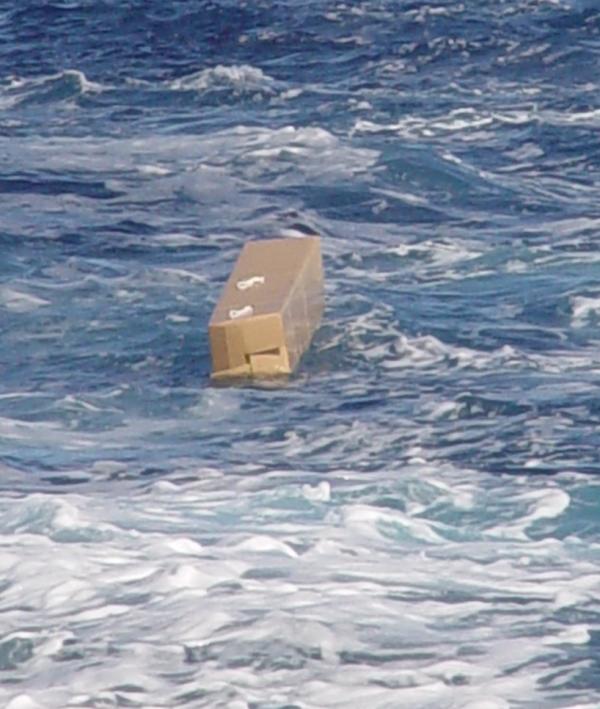
“Last week, Hurricane Michael hit, and we were flooded. The waters came up so fast we didn’t have time to move some of our product indoor. One of our pallets of marijuana consumables and research samples floated off the FTZ. River water came up, the fence came down, and the pallet was gone.”
“Let me guess, the North Carolina State Troopers seized it.”
“Yup. Marijuana in any form is illegal in North Carolina. So it was seized.”
“I see. Well, Harry, the bad news is that there is nothing I can do for you. Marijuana is illegal in North Carolina, and the State Troopers are clearly doing their job. I can now see how it is ‘legal contraband,’ but, frankly, there is nothing I can do.”
“Oh, we don’t want the product back. We just want a police report. Then our insurance will cover the loss.”
“Why didn’t the State Troopers issue the report?”
“They gave me a bunch of reasons. First, it’s contraband and only has an owner if they prosecute. They cannot prosecute, so the contraband has no owner. Second, technically, the FTZ is not the owner of the product. We just handle it. Think of us as truck drivers. We drive trucks full of product but we do not own the product. We only move it. So, technically, we do not own the marijuana product.”
“Who does own it?”
“In the real world, it doesn’t matter. If your home gets burglarized, the insurance company issues you a check for the damages. The insurance company doesn’t ask if you have paid off the mortgage for your home before it pays for damages. The insurance company also doesn’t care if you still making payment on the television. It simply assesses damages, writes a check, and that’s the end of the story.”
“Was there another reason? You said, ‘a bunch’ and you only gave me two.”
“There was nothing on the boxes to indicate who might have owned the contraband. The water washed all the ink and packaging labels away.”
“The boxes were floating individually?”
“No. They were on a pallet that was floating.”
“How many boxes are we talking about?”
“15. Each weighed about ten pounds. 150 pounds total.”
“How do you know the boxes the State Troopers have are yours?”
“The pallet had our name on it.”
“How much street value are we talking about?”
“What you are asking is a word game. We don’t think of our cannabis products in terms of street value because we don’t sell them. We make them. Then we package them. Gram, ounce, sucker, mint or additive. There were also some experimental cannabis oil samples destined for a research laboratory and the chemical building blocks of some medicinals. It wasn’t all for the ‘street,’ the way you use the term.
If you add up the losses, I’d estimate $100,000. But that’s when everything is sold in stores where cannabis products are legal. Our hard dollar losses at the FTZ are in the range of $5,000. We are only out the raw product. The insurance company might not give us the whole $5,000 but that’s not what is important. We want the police report to prove we aren’t skimming our clients.”
“OK. What’s the national security angle?”
“Well, it starts with politics.”
“Always does.”
“My Commissioner of Homeland Security is pulling a fast one.”
“Note the look of surprise on my face,” Noonan snarked.
“Yeah,” said Harry. “He figures to play both ends against the middle. And since his wife is running for the Turtle Assembly . . .” He let the sentence hang.
Noonan finished it. “. . . so he wants the police report to make you happy and quiet. Then he wants the paperwork so his wife can wave it around and say how the Troopers are doing their job and keeping the Turtle community safe from hippies and dopers.”
“As I am sure you can figure out, by dumping the problem onto some other Commissioner of Homeland Security, particularly one with no jurisdiction here . . .”
Noonan shook his head sadly and finished this sentence as well. “. . . if things go well, everyone gets good ink in the local paper. If things go badly, well, it will be the Sandersonville Commissioner who ends up with egg on his face.”
“Exactly.”
“What a way to start the day,” snipped Noonan.
* * *
When Noonan called the North Carolina State Trooper satellite substation in Turtle, they were more than accommodating.
That was the good news.
And that was all the good news there was.
The bad news was that Commissioner Lizzard had already been on the phone with their commander. But this was only the latest augmentation in a growing mudball of political intrigue.
As Noonan knew, the greatest benefit of a statewide law enforcement is that there is an ultimate authority. And that authority is in the state capital, not a local jurisdiction. The trooper who found the alleged ‘legal contraband’ had filed her report in Greenville, and the paperwork went up the administrative chain of command. A police report could have been written if the wife of the Commissioner of Homeland Security for Turtle and Greenville had not been running for the Turtle Assembly.
But she was.
The report could still have been written, but that possibility was extinguished when the Commissioner of Homeland Security for Turtle and Greenville called the State Troopers demanding a police report be written posthaste. This scent of politics wafted up the chain of command and the request fell on deaf ears in headquarters. There was not going to be a report of any kind before the election, and after the election, well, there would be no reason for a report to be issued. As they say in some parts of country, EOS, “End of Story.”
The situation worsened when the Commissioner of Homeland Security for Turtle and Greenville called the Commissioner of Homeland Security in Sandersonville to ask the case be assigned to Captain Heinz Noonan, the “Bearded Holmes” of the Sandersonville Police Department. Lizzard then called the State Trooper command in Turtle and stated the “Bearded Holmes” was on the case and he, Noonan, would have the case wrapped up lickety-split and there was going to be a press conference announcing the resolution of the case at 3 p.m.
That day.
Did the Commander of the State Trooper post in Turtle wish to be there?
When it rains, it pours.
The Commander of the State Trooper satellite office in Turtle called the Commissioner of Homeland Security for Turtle and Greenville to state the Troopers knew nothing of any “Bearded Holmes” being on any case involving river flotsam – much less the “Bearded Holmes” had solved a case the State Troopers did not yet know was a case. The Commissioner of Homeland Security for Turtle and Greenville told the State Trooper Commander “don’t worry about it,” but to “be on hand for questions from the press” at the 3 p.m.
Today.
The call from Lizzard had been made at 9:30 a.m. Lizzard’s call to the Commissioner of Homeland Security for Turtle and Greenville had been at 9:45 a.m. The call from the Commissioner of Homeland Security for Turtle and Greenville had been at 9:50 a.m. At 10:01 a.m., Noonan got a call from Harry Salinger. “I didn’t do it.”
“I’m assuming you mean the mess this marijuana has caused in Turtle and Greenville.”
“Absolutely. Had I known what a rat nest it would have generated, we would have swallowed the loss and been happy.”
“Politics makes all things difficult. I know you didn’t do it. It was the commissioners, both of them, playing fast and loose with the facts. The bad news is I have been ordered to wrap up the case by 3 p.m. The good news is I don’t have to be at the press conference in Turtle. You do. At the very least, you’ll be out of this mess by 3:01 this afternoon.”
“Thank you very much. Sorry for the mess.”
“Not a problem. One more thing. When you show up at 3 p.m., bring a clothes pin.”
“Clothes pin?”
“The stench of politics is going to be overpowering.”
* * *
Two days later, Harriet came into Noonan’s office with a pack of cigars in a postal envelope with a mirror.
“I didn’t know you smoked?” she said as she put the cigars and mirror on Noonan’s desk.
“I didn’t know I smoked either.”
“Then, what’s this?” Harriet pointed at the cigars.
Noonan looked at the cigars sideways. “Looks like cigars to me.”
“I am pleased your eyesight is 20-20! Is there a reason the cigars are here? And why did they come with a mirror?”
“How did they get here?”
“In the mail.”
“Then, that’s how they got here.”
“C-a-p-t-a-i-n,” Harriet stretched out the name.
“W-e-l-l,” said Noonan stretching out the word. “I filed a police report for the theft of a pallet. Seems a $5,000 pallet disappeared. I investigated, found it to be missing, possibly stolen. and filed a police report.”
“$5,000? Where was it missing?”
“In Turtle.”
“Turtle? That’s out of our jurisdiction.”
“Crime knows no boundary.”
Harriet gave him a hard look. “Did this have anything to do with the press conference his majesty held yesterday?”
With an absolute look of innocence, Noonan said, “What press conference?”
Harriet would have none of it. “Hum, let’s see. The press conference where his majesty stated he and the Commissioner of Homeland Security for Turtle and Greenville had broken up a drug cabal and stopped dangerous drugs with a street value of $500,000 from infecting the youth of coastal North Carolina.”
“Really? Did he say that?” Again, Noonan’s expression was bland. “My, oh my. The work the Office of Homeland Security is doing these days.”
“Uh-huh. Harry Salinger was there too. You know, the Harry Salinger who sent this package of cigars you are not going to smoke. I wonder why he was there?”
“What did he say?”
“He credited the Office of Homeland Security for keeping Sandersonville, Turtle and Greenville safe from the scourge of dangerous drugs.”
“A fine man.”
“That’s it?!”
“What else can I say. ‘All’s well that ends well.’”
“You and Shakespeare,” snapped Harriet.
An hour later, Noonan got a call from Salinger.
“Get your cigars.”
“I don’t smoke.”
“Neither do I. It’s bad for your health. I can’t pay you for your service, of course, but I could send something you would appreciate: smoke and a mirror.”
“An excellent choice for this matter if I do say so myself.”
“And for your linguistic friend, you might tell him, the most popular destination for law enforcement officers is Doubt. That’s because they are always in doubt.”
With that, the phone went dead.
👉Learn more: https://bit.ly/3NJvjkk