
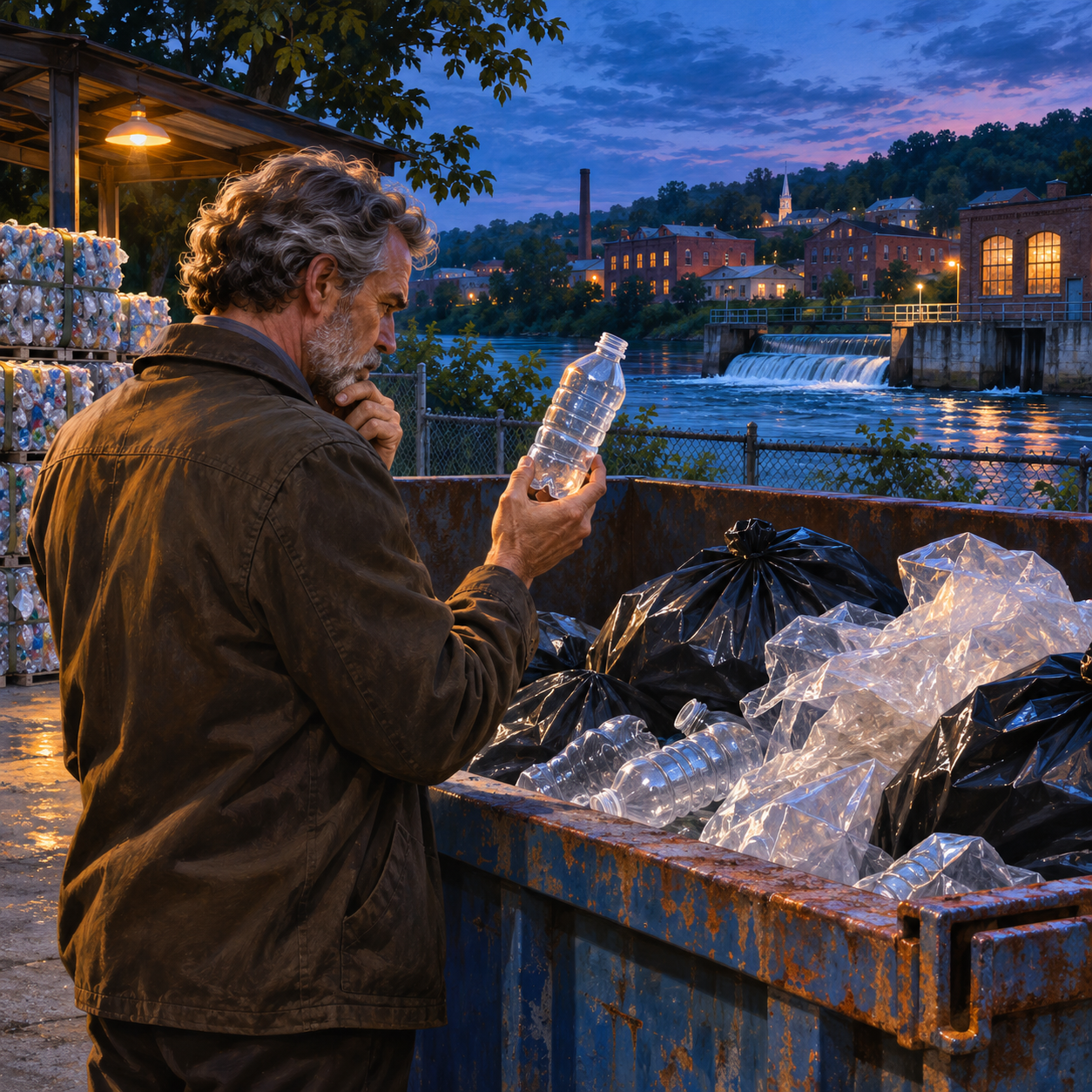
Captain Noonan, the “Bearded Holmes” of the Sandersonville Police Department, was pleasantly enjoying an evening on the town. Even though the town was Sandersonville and he was a happily married man, he occasionally had a free evening. Like this one. When his wife dragged him to her bridge club and then set him free ‘until I call.’ This meant Noonan was in Sandersonville, not at home, not at the office, not at a nightclub because he had to drive ‘whenever’ he was called, not at a movie theater because the bridge game could be short, and not at a friend’s house because when you are a cop, no one who is not a cop is ever really sure why you would show up unannounced.
So Noonan went to the one place he could nibble, not drink, and no one treated him as an undercover agent of the law: the Sandersonville Grille. The Grille had the ‘e’ because the owner was ‘Ellery’ and somehow, Ellery saw his name written backward in the name of his establishment. (No one else saw it that way.)
Ellery was not surprised to see Noonan in the Grille. He was not surprised because Ellery’s wife was also a bridge player, so the two of them had something in common: wives who gave them the night off.
Intown.
On call.
Ellery was in his Grille because he too had no particular place to go, did not drink and was waiting for his wife’s call. Noonan was in the Grille because he had no particular place to go, did not drink when he had to drive, and was waiting for his wife’s call. They had a lot in common.
Tonight.
The two of them were consoling each other over the sad state of affairs which occurred when a man had the evening off, and there was no ‘Man’s Club’ or equally enjoyable place in Sandersonville when Ellery brought up the subject of garbage bags. This caught Noonan by surprise, as he had not been speaking of garbage bags, knew little about them, and only thought of them when one ripped on its way to the garbage can.
“Pardon?” Noonan stopped sipping his diet something and looked across the Grille counter at Ellery.
“Garbage bags. You know, the kind you fill with garbage. Well, more than garbage bags. Plastic bags. Big, little, odd, thin, thick.”
“I must have missed something. Why are we talking about garbage bags?”
“We weren’t. I was. I was talking about the garbage bag truck containers that were stolen in Turtle.”
“I haven’t heard anything about that?”
“I just told you. Ah, we’re gettin’ old, Heinz. And this is your kind of a crime. So to speak. I mean, it might not be a crime. Who steals used garbage bags? Is that a crime?”
“Used garbage bags?” Now Noonan was on beam. “Why don’t you start from the beginning again? You didn’t slip anything strange into this, this, this,” he held up his paper cup of diet whatever.
“Nothing legal or illegal. My brother-in-law’s cousin or something like that, has a kid who volunteers at the Turtle Recycling Center. N-virn-mental kid. Save the world one glass bottle at a time kind. He was just saying someone has been purloining – one of your favorite terms – used plastic garbage bags and such. You know, the kind you recycle.”
“Stealing used garbage bags? That’s a bit odd.”
“I thought that was the kind of odd stuff you specialized in. Maybe used garbage bags are outside your realm of odd stuff.”
“Used garbage bags?” Noonan muttered to himself. “Well, it’s unusual. Do you have a number for the N-vir-mental kid?”
“Hope not,” snapped Ellery good naturedly. “But as soon as I get the call I’m not waiting for, I’ll ask.”
* * *
The N-vir-mental kid turned out to be a college engineering graduate who was concentrating on renewables. “Your generation calls it recycling,” Ellery Lundybe told Noonan. “I’m named after my uncle Ellery, the one you know. He’s a dinosaur. He believes in what we call EM, ‘environmental magic.’”
“‘Environmental magic?’” Noonan was clearly confused.
“‘Environmental magic’ is the belief that when you throw something into the trash, it disappears. The worst cases are those who put paper, plastic, and beer cans into the orange garbage recycle bins and think the trash is going to be magically transformed into new paper, plastic, and beer cans in a never-ending cycle of reuse.”
“Oh,” said Noonan, surprised. “I guess I’m one of those dinosaurs.”
“A lot of people are. I can’t change that. What I want to do is make the magic real, so to speak. Now, why are you calling?”
“Ellery, your uncle, said someone has been taking your garbage bags. That’s odd. Is it true?”
There was silence on the phone for a moment, and then Lundybe said carefully, “Well, yes, someone has been taking garbage bags, but there’s not really a crime. It’s trash and taking trash is not a crime. You’re a cop, right?”
“Yes, I am a cop. And, yes, taking garbage is not a crime. But it is odd, and I am always interested in the odd and unusual.”
“OK. Part of my ongoing research involves the Turtle Recycling Center. It’s like most other recycling centers in the sense it has separate bins for different kinds of renewables. We call them ‘renewables.’ Keeping this as simple as possible, glass, paper, and plastic bags are collected separately. Glass and paper can be recycled into new products, but there is no direct line between what goes in the bin and what appears on a store shelf. But they can be recycled.”
Lundybe took a breath. “But plastic, and specifically plastic bags, sheets and bottle are a different story. There is no way to recycle them in small communities so they are sent to China to go into landfills.”
“China?!”
“Yup. That’s right. The recycling dollars you pay in America are spent in China putting the stuff into the ground. Sooner or later the Chinese are going to stop taking so-called recycles and then we’re going to be stuck with them.”
“Isn’t anyone in the United States taking this seriously?”
“Well, you’re talking to someone who does. But you wanted to know about the plastic garbage bags.”
“Yes.”
“Generally speaking, when people have plastic bags, wraps, and thin plastic, they put them in garbage bags and then tie off the bag. That bag goes into a recycling container as a unit. Every few days, when the container is full of these garbage bags, a tow truck elevates the container, puts it on a wheeled carriage, and hauls it away. The container is emptied into a compactor which flattens the plastic. When enough plastic has been flattened for a load, it’s off to China. Not directly, of course, just out of Turtle.”
“But someone stole a load of the full plastic garbage bags?”
“More than one. And not just garbage bags. Plastic containers, bottles and cups, as well. How many, we’re not sure. We don’t make regular pickups of the recyclables. When the six-by-twenties, that’s the size of the recycling containers, get full, they are replaced by empty six-by-twenties. We didn’t know we were missing any recyclables until late last month when we realized monthly averages were low.”
“How low?” Noonan asked as he opened up a notebook.
There was a chuckle on the Lundybe end of the phone line. “Poundages will mean nothing to you. In street talk, about two, six-by-twenties of both the plastic bags and plastic bottles.”
“Do the plastic bags and bottles have any street value?”
“No. That’s why they are thrown away.”
“How did the thieves get away with the bottles and bags?”
“First, they are not thieves. The bottles and bags have no value. They were able to get away with the loot – to use a term you cops understand – by replacing the six-by-twenties. We have a number of empties on site. All the thieves – again, your term – had to do was hook up a truck to the full container, pull it onto a carriage, and then drive ten yards. Then they would unhook the truck, drive over to the empty six-by-twenties, pull one onto a carriage and place it where the full container was. The carriages are there in the park. With two trucks they could do the job in about ten minutes. Tops.”
“There are no security cameras in the recycling yard?”
“Why?”
“Good point. And you can’t think of any reason why anyone would steal the garbage bags and bottles?”
“Not a one. And they weren’t stolen. If anyone wants used plastic, they can have it. But we’d like to know what they do with it. It could be a whole new industry we have not thought of.”
* * *
When it came to what his office called loo loo calls, Noonan had two tried-and-true investigatory tools: history and the newspaper. He knew from long experience the truth in Alaskan humorist Warren Sitka’s adage: “History is not the story of the past. It is the study of the future.” What ‘is coming’ has already been done so how it was ‘resolved’ in the past is how to treat it in the present.
Turtle, North Carolina, was about 50 miles from Sandersonville, so Noonan had a firm grip on the community’s history. It had been born as Terminus, though never christened that way. It was referred to as Terminus because it was where a myriad of railroad tracks converged in Coastal North Carolina as railroads spiderwebbed across the country. It was perfectly located for a hub for north and south travel between the big East Coast cities and Florida vacation resorts in the South. In the 1920s, as the vacation options – and land acquisition possibilities – opened up in the Appalachian foothills and the Great Smoky Mountains beyond, spur lines ran from the hub in Terminus – now named Turtle – through Raleigh, Fayetteville, Charlotte, Winston-Salem and beyond to Atlanta and Columbia to the south and Knoxville to the west.
The community boomed until it was economically savaged by the triple whammy of the Great Depression, dropping in price of passenger cars and the combined impact of the interstate highway system and the rise of the trucking industry. But it did not die. It hemorrhaged businesses and population until the 1980s, when it was rediscovered. It had cheap land, an in-place transportation system that could be used by the retail giants who were moving more toward catalog sales and away from the big boxes. By 2000, with the rise of AI, it was the perfect location for online warehousing. Even better, when Turtle had been Terminus, there were rows and rows and rows of mechanical sheds, supply depots, cafeterias, bunk houses, stores, and restaurants that had been abandoned. Built to last a century, the structures were still stable and usable. So they were used by the incoming tech-age businesses. Turtle exploded as a warehouse hub and with it, back again, historically speaking, came the population. What it had offered in the 1920s was the same it was offering a century later: a central location with in-place access to a transportation system.
There were growing pains, of course, but the community – now a city – was resolving them one at a time. An airport was being constructed on what was a collection of abandoned peanut farms and the city was experimenting with solar power. But there was a problem with solar power. It was inconsistent because of the technology, not the sun. This was perfectly acceptable to the businesses in Turtle because they, universally, realized it was better to be on the bleeding edge of technological advance than on fossil fuels. Fossil fuels had to be shipped in while solar power was there for the taking. Better, while it would take a number of years to perfect the technology of solar power, Turtle wanted to ‘be there when the bugs were all worked out’ rather than wait and find the power grid to be too expensive to install in toto. In the meantime, Turtle’s power was provided by a mix of low-head hydro, power-generating incinerators burning fuel pellets made from compacting garbage, some ancient diesel generators, and a windmill farm. When all worked well, the power grid was ‘full,’ so to speak, but outages were frequent enough to be annoying.
The Turtle Gazette, a grocery store tabloid on its way to full-service newspaper status, was chockful of local news. Noonan was able to pull up the previous months online and spent all of two hours reading the local dirt. Turtle, like other communities its size, had its share of social gossip along with editorials about how such-and-such would be a good idea and why doesn’t the city council consider this and that. Only three stories caught Noonan’s attention. One was the “sad state,” (the Turtle Gazette’s term) of the low-head hydro that fed Eastern Turtle. Eastern Turtle was what was left of the ‘old’ city with its longest established businesses: two banks, three restaurants, a string of warehouses and a handful of boutiques which were, again the Turtle Gazette’s term, “erupting like weeds in structures better suited for office space to employ residents rather than steal their moneys.”
Secondly was a story about the arrival of a large, online jewelry franchise. This was an oddity for Turtle as it, the franchise, expected to use all three of the transportation options at the same time. High-end, customized jewelry would be flown out; wholesale jewelry would be moved on the rails to Atlanta, Mobile, and up the coast of North Carolina to Virginia Beach, Richmond, and on to Washington, D. C., and New York. It would also be using the trucking network to move the raw product into Turtle to be turned into the customized and retail product.
Third, it was a shady business with clearly forward-looking intent. On paper it was a high-end liquor distributor. But it fooled no one. This was a business which should have been content with secure warehouse space and ready access to all three means of transportation to its markets: rail, road and air. This business was clearly forward-looking in what many residents viewed – again, according to the Turtle Gazette – the ‘wrong direction. The company had snapped up close to 10,000 acres of abandoned farms in the area and was “sitting on them in the clear hope of the legalization of marijuana which, at this time, is a pipe dream, pun intended,” so stated the Turtle Gazette but denied by theliquor distributor though its spokesperson in Charlotte.
With nothing to lose and much to gain because his wife had been insisting they spend Saturday at the Sandersonville-Buxton Blue Crab Festival, Noonan told his wife he had “business” to take care of in Turtle. His wife never questioned the veracity of his “business,” so, while she went booth-to-booth in Buxton, he went to Turtle.
Escorted by the Turtle Chief of Police, one of six policemen for the city, Noonan was able to gain entrance to Brindisi, the high-end jewelry franchise. Inside he found exactly what he expected. The security system was top-notch, and the workers were all Balkan, Russian, or some mix of Eastern Europe. The office staff was all American or European. He was allowed to poke around the premises for about half an hour – but not in the vault because it was on a time lock and Saturday was not a business day – and surprised everyone when he asked to see the trash room.
No one asked why.
Inside the trash room, all Noonan saw was trash, and he was assured – and shown – how the security system operated when it came time to remove the packaging. He was also given a tour of the warehouse yard just in case, in their words, he was worried the trash room entrance might be a weakness in the security system.
Next was East Turtle. There was not much to Noonan’s eyes that made it an “East” because it looked just like the rest of Turtle. The only real difference, he was told, was that it was ‘experimental’ in the sense that its power system was a mix of low-head hydro, wind generation, and fuel pellet technology. The power system for East Turtle was backed up by the “ancient and Paleolithic” – the mayor’s words – diesel furnaces which Turtle had to keep online until renewables proved consistent. Noonan could see a dozen windmills in the distance and the mayor was pleased to show him the “newest, best and brainiest” power source, low-head hydro. It started as a large pond being used by kayakers and swimmers, with the penstock “downstream below a 30-foot dam.
“The real genius here,” the Mayor said proudly, “are the downstream penstocks. The dam only provides about half the power for East Turtle. The rest is generated by six, very low-head penstocks. Each are about four feet high. It’s genius. Rather than one big dam, we’re drawing power from the river every few hundred yards. It’s a lot cheaper that way, and if it works, well, there are lots of miles of river for us to harvest power!”
The liquor franchise, Eastern North Carolina Liquors and Spirits, was less than enthusiastic to answer any of Noonan’s questions. They only allowed him to step into their warehouse for a “look-see,” but he could not “roam about.” But from where he stood, Noonan could see a substantial amount of vacant space. He did not ask the eventual use of that space, but he did surprise the workers by asking to see their trash room. The office staff of Eastern North Carolina Liquors and Spirits were not taken aback by the request. Their response was “it’s on the same system as Brindisi.” When Noonan expressed surprise, he was told, “We’re a small town, Captain. We all talk.”
“Then you know about the garbage bag robbery?” Noonan fired a shot across the bow.
He got more than a tell. He got an actual tell. “Sure. Everybody in Turtle knows! But what can you do with a truckload of garbage bags and old plastic bottles? You can’t burn ‘em, can’t drown ‘em, they can’t fly and pollute the ground if you bury them.”
And a distant gong went off in Noonan’s brain, low but clear and unmistakable.
* * *
The next Friday, as he was not looking forward to another Saturday afternoon of some kind of Outer Banks festival where he would have to be nice to people he could have gone the rest of his life and never seen again and be happy, Noonan’s administrative assistant, Harriet, came into his office with a crate. A box it was not. A box is the size of an if-it-fits-it-ships. A crate is cargo. Cargo, as Noonan humorously remembered, is an American linguistic oddity. Cargo goes on a ship, but a shipment goes in a car.
This shipment, because it had to have come by car, was from Turtle.
“Weren’t you in Turtle last Saturday?” Harriet said as she dropped the crate on his desk. “The kind of friends you must have made there.” She pointed inside the crate.
“Why’s that?” Noonan asked.
“Because of this,” Harriet said as she reached into the crate. She pulled out handful of plastic bags, bottles and sheets. “What’s this all about?”
Noonan didn’t so much as break into a smile. “Was there a note with it?”
“Really?! You think the Turtle Police Department would send a box of garbage bags with no note?!”
“Crate, Harriet, crate. A box is smaller. Well . . .” He let the sentence hang.
“Yeah, yeah, yeah. It came with a note.” He pulled a piece of paper from the crate and gave it a shake as if it had cooties. “Says, ‘Thanks for the tip. Stopped the robbery. Could only get them for littering. But I did turn them over to the feds for polluting running water.’ This have to do with the robbery of that garbage?”
“Recyclables, Harriet. Recyclables. The industry of the future. Yes, seems the thieves figured they could jam up the low-head hydro in Turtle. That would have caused a power outage. While the power was down, they were going to hit the bank.”
“What’s low-head hydro?”
“Basically little tiny dams. Water runs through the dams and turns turbines that produce power. By dumping what you call garbage into the water, some of the plastic sank, and some of the plastic floated, and all the plastic was sucked into the penstocks. Turbines would have stopped turning, and the power to the bank would have gone off. The plan was for one or two thieves to drive down the road beside the six low-head hydro dams and dump in the garbage. The plastic bags and cups and bottles would have been sucked into the water channels and jam the turbines. When the turbines stopped turning, the power in the bank would have gone off. All the thieves needed was a few minutes to rob the bank. When the power came back on, and the alarm went off, they would be gone.”
“But you snookered ‘em. Good for you. Now, what do we do with these?” Harriet shook the garbage.
“Recycle them, Harriet, recycle them. You could be holding next year’s hair curler.”
“I’m a blow-dry woman. Is recycle what you do with your bad jokes?”
“Well, you know, Harriet,” Noonan said with a smile. “The garbage business is picking up.”